標的型攻撃メール訓練

これはFUJグループ合同で実施しているセキュリティ訓練です。
被害は発生していません。
本ページの内容は訓練終了まで他者へ共有しないでください。


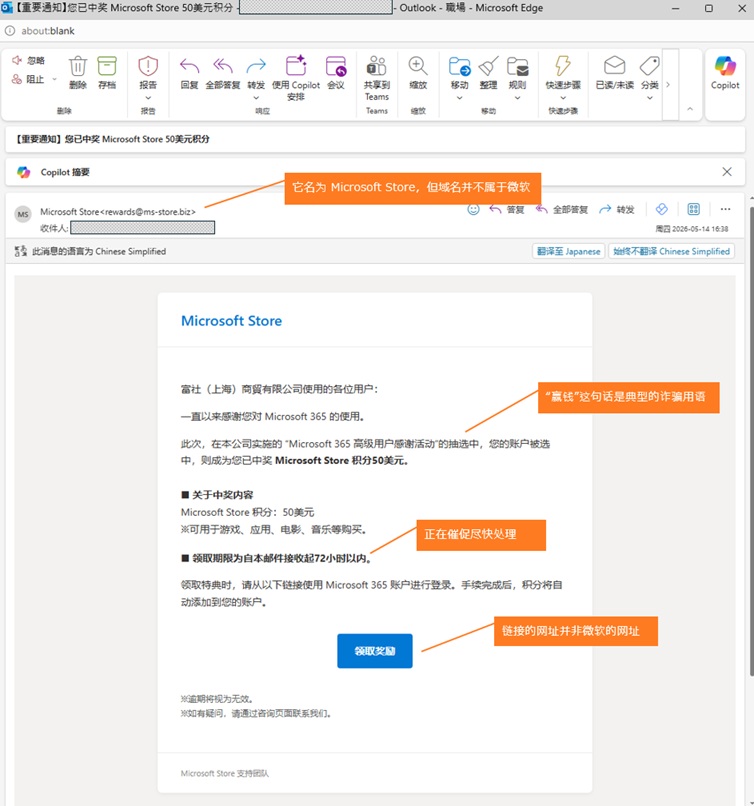
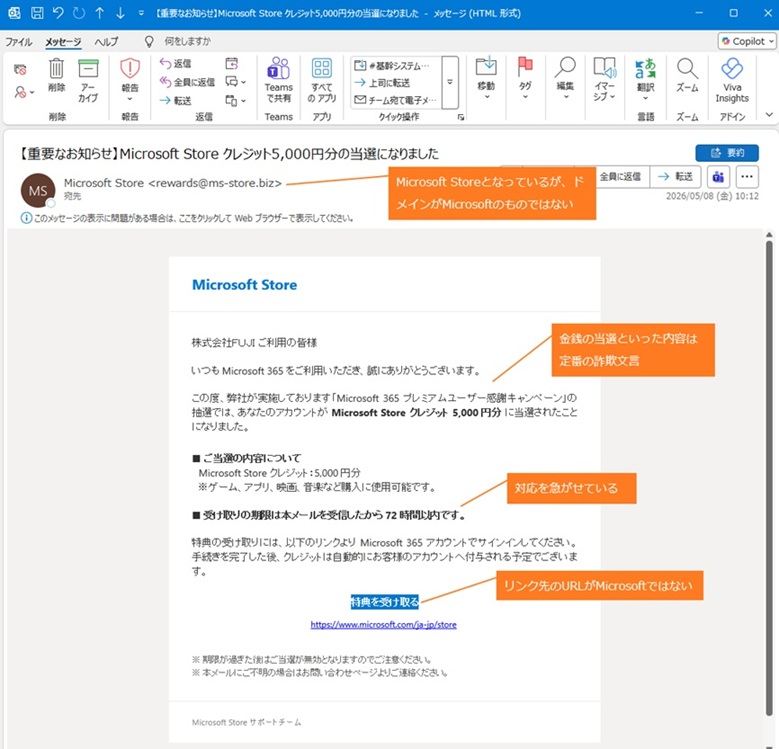
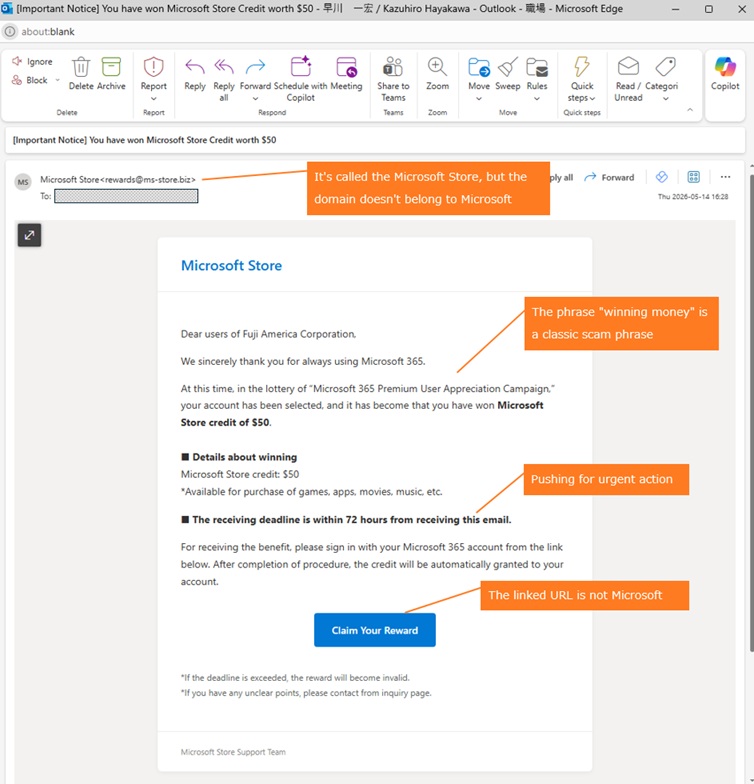
今回の訓練メールのポイントは下図の通りです。


メールを開く際には必ず以下に注意してください。

  1. 差出人アドレスがおかしい(特に@以降のドメイン部分)
    公式に見えても、微妙に違うドメインやスペルミスがある場合があります。

  2. 件名や本文に「緊急」「至急」「アカウント停止」などの不安をあおる表現がある
    受信者を焦らせて冷静な判断をさせないようにしています。

  3. 「急いで対応してください」など、急がせる表現がある
    「24時間以内に」「今すぐ」「至急」など、短時間での対応を求めてきます。

  4. 本文の日本語や英語が不自然
    機械翻訳のような不自然な表現や、敬語の使い方がおかしい場合があります。

  5. 不審なリンクや添付ファイルが含まれている
    リンク先のURLが公式と異なる、短縮URLが使われている、または不審な添付ファイル(zip、exe、xlsmなど)がある場合は要注意です。

  6. 個人情報やパスワードの入力を求めてくる
    正規の企業やサービスがメールでパスワードやクレジットカード番号を直接聞くことはありません。

  7. 送信元の署名や会社情報が不十分
    会社名や連絡先が書かれていない、または実在しない場合は疑いましょう。

  8. 送信日時やタイミングが不自然
    深夜や休日に届く、普段やり取りのない相手から突然届く場合は特に注意です。
Targeted Phishing Email Training

This is a security training conducted jointly by the FUJ Group.
No damage has occurred.
Please do not share the contents of this page with others until the training is completed.


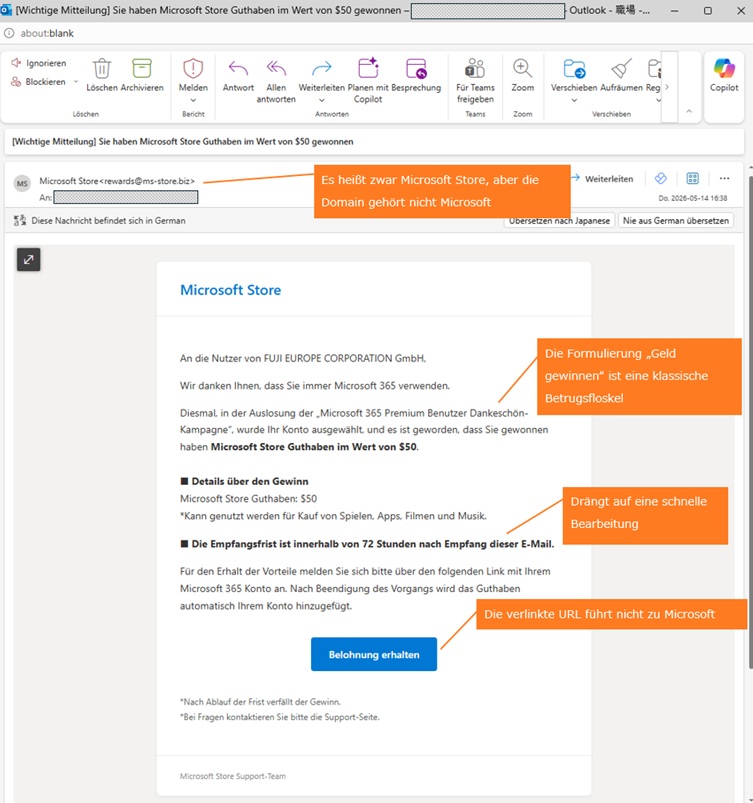
The key points of this training email are shown in the figure below.


Please be sure to check the following when opening emails:

  1. The sender address is suspicious (especially the domain part after "@")
    Even if it looks official, there may be slight differences in the domain or spelling mistakes.

  2. The subject or body contains alarming words such as "urgent", "immediate", or "account suspension"
    This is intended to make the recipient panic and prevent calm judgment.

  3. There are expressions that rush you into action
    Phrases like "within 24 hours", "immediately", or "urgent" are commonly used.

  4. The language in the email is unnatural
    There may be awkward phrasing due to machine translation or incorrect formal expressions.

  5. Suspicious links or attachments are included
    Be cautious if the URL differs from the official one, uses shortened links, or includes suspicious files (zip, exe, xlsm, etc.).

  6. The email requests personal information or passwords
    Legitimate companies or services will never ask for passwords or credit card information directly by email.

  7. The sender's signature or company information is insufficient
    If company name or contact details are missing or fake, be cautious.

  8. The sending time or timing is unusual
    Be especially careful with emails sent late at night, on holidays, or from unfamiliar contacts.
钓鱼邮件演练

这是FUJ集团共同实施的安全培训。
没有发生任何损害。
请在培训结束前不要与他人分享本页面内容。


本次训练邮件的要点如下图所示。


打开邮件时请注意以下事项:

  1. 发件人地址异常(特别是“@”之后的域名部分)
    即使看起来是官方邮件,域名或拼写也可能存在细微差异。

  2. 标题或正文中包含“紧急”“立即”“账户停用”等令人焦虑的词语
    目的是制造紧张情绪,使收件人无法冷静判断。

  3. 存在催促立即处理的表达
    例如“24小时内”“立即处理”“紧急”等。

  4. 邮件语言不自然
    可能存在机器翻译带来的不自然表达或语法问题。

  5. 包含可疑链接或附件
    例如与官方不同的URL、短链接或异常文件(zip、exe、xlsm等)。

  6. 要求输入个人信息或密码
    正规企业不会通过邮件直接索取密码或信用卡信息。

  7. 发件人签名或公司信息不完整
    公司名称或联系方式缺失或虚假时需警惕。

  8. 发送时间异常
    深夜、节假日或来自不熟悉对象的邮件需要特别注意。
Phishing-Schulung

Dies ist eine Sicherheitsübung der FUJ-Gruppe.
Es ist kein Schaden entstanden.
Bitte geben Sie den Inhalt dieser Seite bis zum Ende der Schulung nicht weiter.


Die wichtigsten Punkte sind unten dargestellt.


Bitte beachten Sie beim Öffnen von E-Mails folgende Punkte:

  1. Verdächtige Absenderadresse (insbesondere Domäne nach "@")
    Auch wenn sie offiziell wirkt, kann die Domäne leicht abweichen oder Tippfehler enthalten.

  2. Dringende oder beunruhigende Formulierungen
    Sollen den Empfänger unter Druck setzen und ruhiges Denken verhindern.

  3. Aufforderung zu schnellem Handeln
    Beispiele: „innerhalb von 24 Stunden“, „sofort“, „dringend“.

  4. Unnatürliche Sprache
    Kann auf maschinelle Übersetzung oder falsche Formulierungen hinweisen。

  5. Verdächtige Links oder Anhänge
    Abweichende URLs, Kurzlinks oder ungewöhnliche Dateitypen (zip, exe, xlsm)。

  6. Anforderung persönlicher Daten
    Seriöse Unternehmen fordern keine Passwörter per E-Mail an。

  7. Unvollständige Signatur
    Fehlende oder falsche Unternehmensangaben sind ein Warnsignal。

  8. Ungewöhnliche Versandzeit
    Nachts, an Feiertagen oder von unbekannten Absendern。
Treinamento de Phishing

Este é um treinamento de segurança realizado pelo Grupo FUJ.
Nenhum dano ocorreu.
Não compartilhe esta página até o término do treinamento。


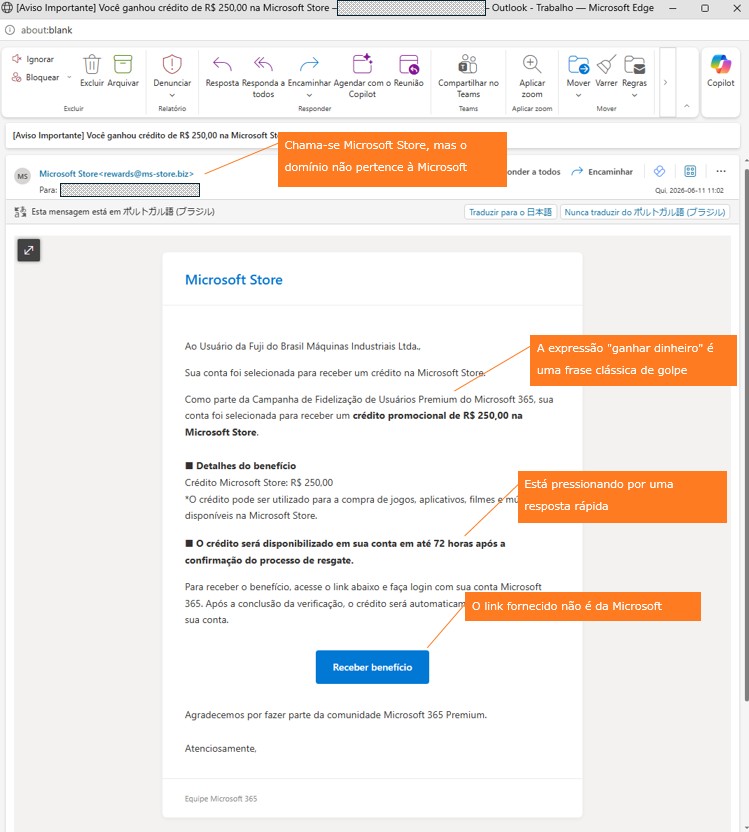
Os principais pontos estão abaixo:


Ao abrir emails,verifique o seguinte:

  1. Remetente suspeito (especialmente o domínio)
    Mesmo que pareça legítimo,o domínio pode conter erros sutis。

  2. Mensagens urgentes ou alarmantes
    Criam pressão para evitar análise cuidadosa。

  3. Solicitação de ação rápida
    Ex: “em 24 horas”, “imediatamente”。

  4. Linguagem inconsistente
    Pode indicar tradução automática ruim。

  5. Links ou anexos suspeitos
    URLs diferentes ou arquivos incomuns (zip,exe,xlsm)。

  6. Solicitação de dados pessoais
    Empresas legítimas não solicitam senhas por email。

  7. Assinatura incompleta
    Falta de informações da empresa é suspeita。

  8. Horário incomum
    Emails enviados fora do horário esperado。